
Light Bulb Coloring Pages (14 Free Printable Sheets for Kids)
Got a bright idea? These light bulb coloring pages are made for curious kids and creative classrooms. This free collection has 14 printable light bulb coloring pages for kids of all ages — from a simple outline for toddlers to a labeled parts page and a detailed pattern design for older kids.
A light bulb stands for electricity, invention, energy, and new ideas all at once, making these sheets perfect for science lessons, invention units, and quiet coloring time at home. Every page is free to print, so teachers can make a full class set and parents can print favorites again and again.
Browse the designs below, check our printing tips, and don’t miss the fun facts and activities at the end — including a safe, adult-led circuit experiment.
What’s in This Light Bulb Coloring Collection
This set of printable light bulb coloring pages includes 14 designs:
- Classic Light Bulb
- Smiling Light Bulb With a Face
- Big Idea Light Bulb Above a Kid’s Head
- Parts of a Light Bulb (labeled, educational)
- LED Light Bulb
- Old-Fashioned Vintage Bulb With a Glowing Filament
- Light Bulb With a Plant Growing Inside
- String of Party Lights
- Table Lamp With a Bulb
- Light Bulb With a Brain Inside
- Light Bulb Pattern Design (detailed, for older kids)
- Light Bulb and Light Switch
- Glowing Light Bulb With Stars
- Simple Light Bulb Outline (easiest, for toddlers)
The first pages are bold and simple for little hands, the middle pages add faces, plants, and party lights, and the pattern page challenges older kids.
How to Print These Light Bulb Coloring Pages
Printing is quick and easy:
- Pick your favorite light bulb coloring page from the list below.
- Print it on US Letter or A4 paper — every design is sized to fit a standard page.
- Use your printer’s “fit to page” setting so nothing gets cut off at the edges.
- For markers or gel pens, print on thicker paper or card stock so colors don’t soak through.
Standard paper is fine for crayons and pencils. Want to color the same design in different colors? Just print extra copies — it’s free!
14 Light Bulb Coloring Pages to Print
1. Classic Light Bulb

The one that started it all: a clean, classic light bulb with smooth glass, a visible filament inside, and a ribbed screw base. It is the perfect first page for learning what a bulb really looks like. Coloring tip: leave the glass mostly white, add soft yellow in the middle, and color the base light grey.
2. Smiling Light Bulb With a Face
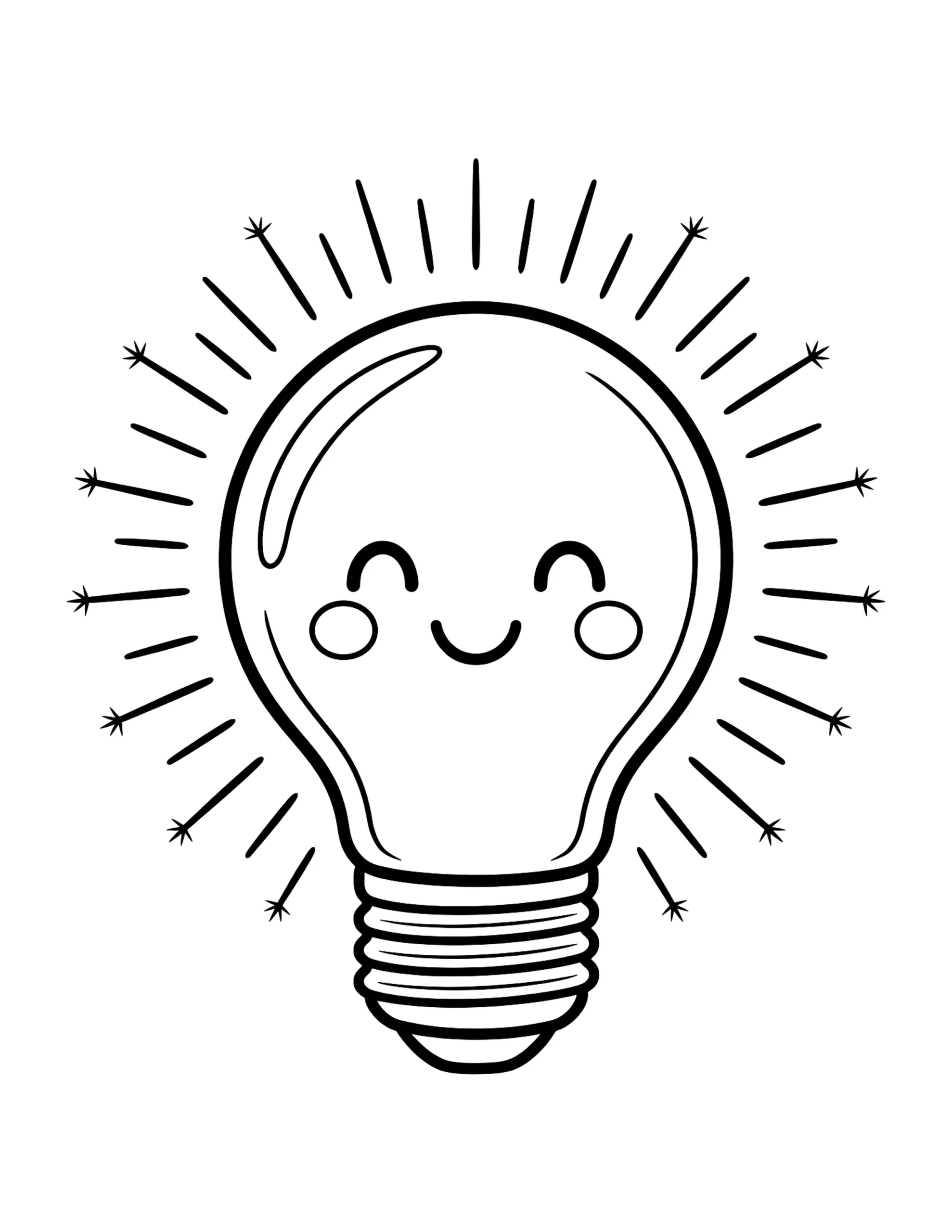
This cheerful bulb has a happy face, rosy cheeks, and little rays shining out all around it. It is a friendly first science page for preschool and kindergarten kids. Coloring tip: bright yellow for the bulb and orange for the rays.
3. Big Idea Light Bulb Above a Kid’s Head
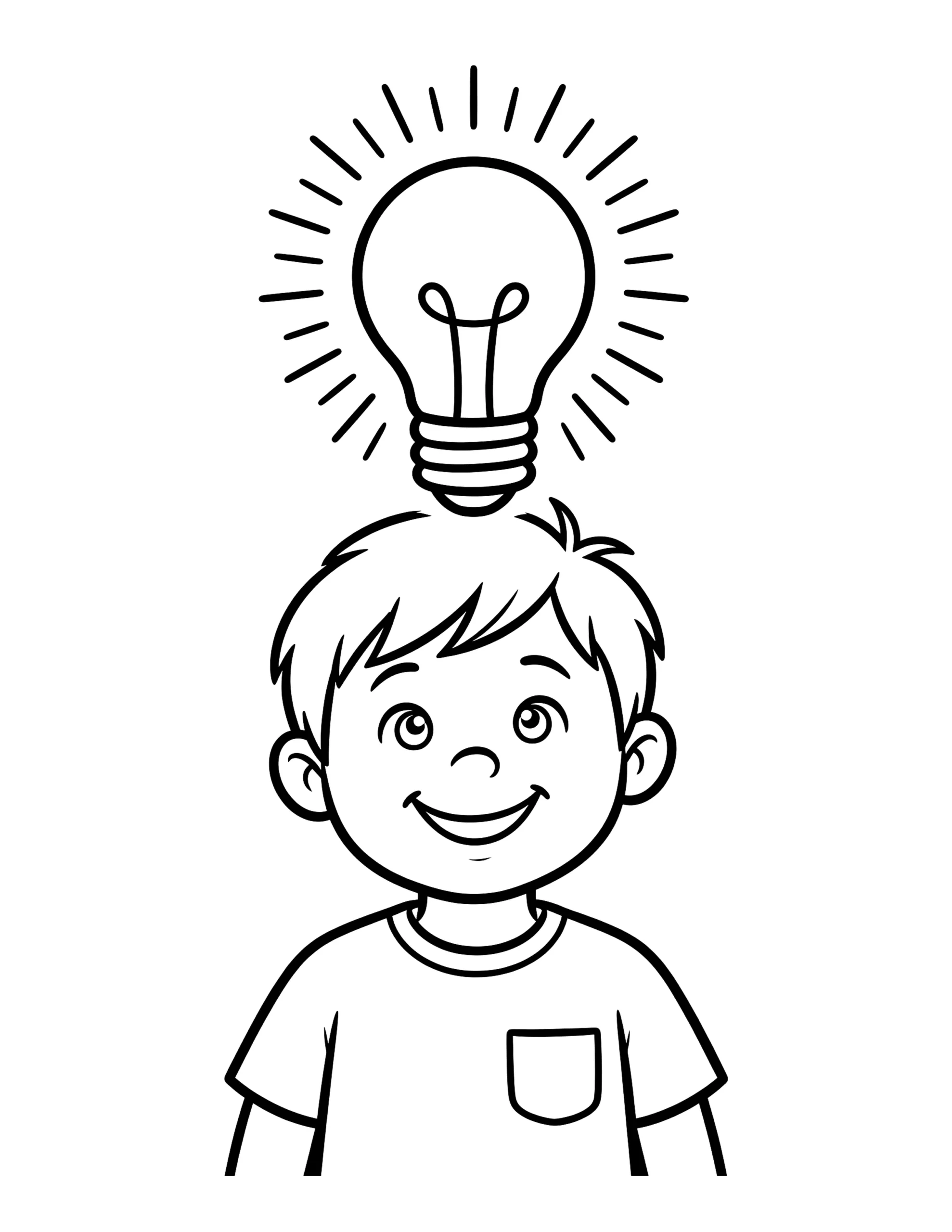
A smiling kid has just had a wonderful idea — and there it is, a big glowing bulb above their head! This idea light bulb coloring sheet is great for writing lessons, invention projects, and “bright ideas” bulletin boards. Coloring tip: make the bulb the brightest yellow on the page.
4. Parts of a Light Bulb (Labeled, Educational)
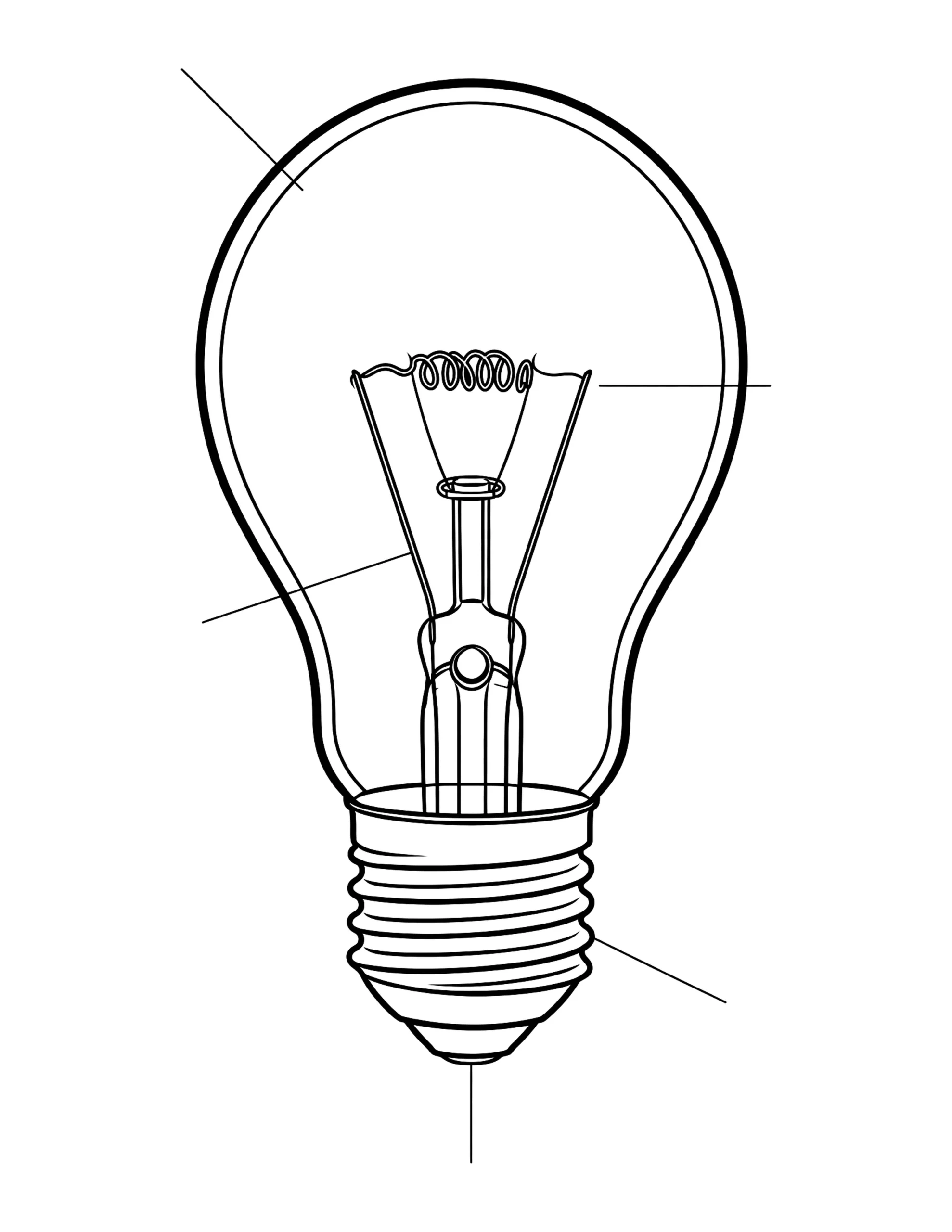
This parts of a light bulb coloring page labels the real pieces: the glass bulb that protects everything inside, the thin filament wire that glows, the metal base or screw cap that twists into a lamp, the support wires holding the filament up, and the contact at the bottom where electricity enters. It turns coloring time into a real science mini-lesson. Coloring tip: use a different color for each labeled part to help you remember it.
5. LED Light Bulb
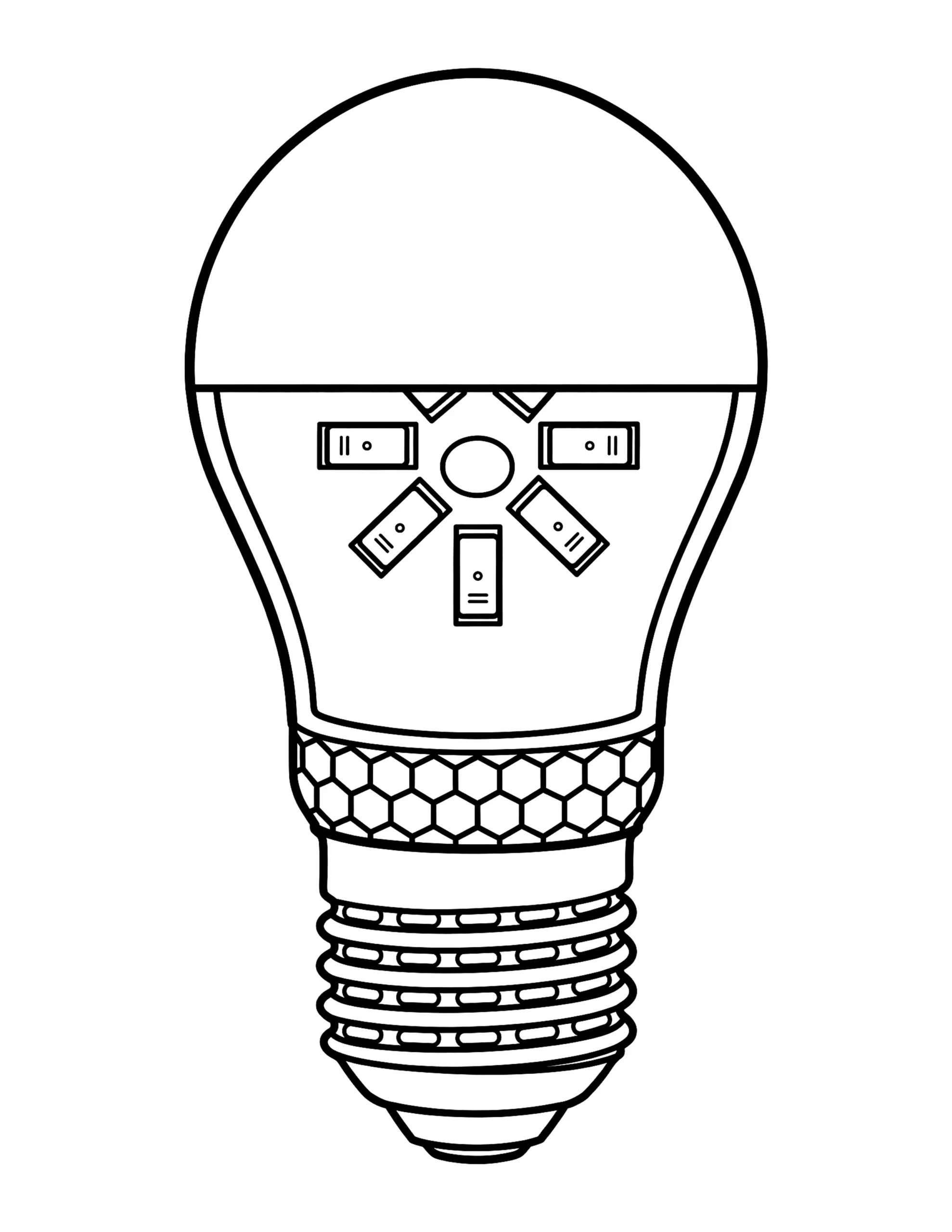
Meet the modern bulb! An LED light bulb has a smooth dome top and a wider base, and looks different from the classic bulb because the technology inside is different too. LED bulbs are the energy-saving bulbs most homes use today. Coloring tip: try pale blue and cool white for the dome — LED light often looks crisper and brighter.
6. Old-Fashioned Vintage Bulb With a Glowing Filament
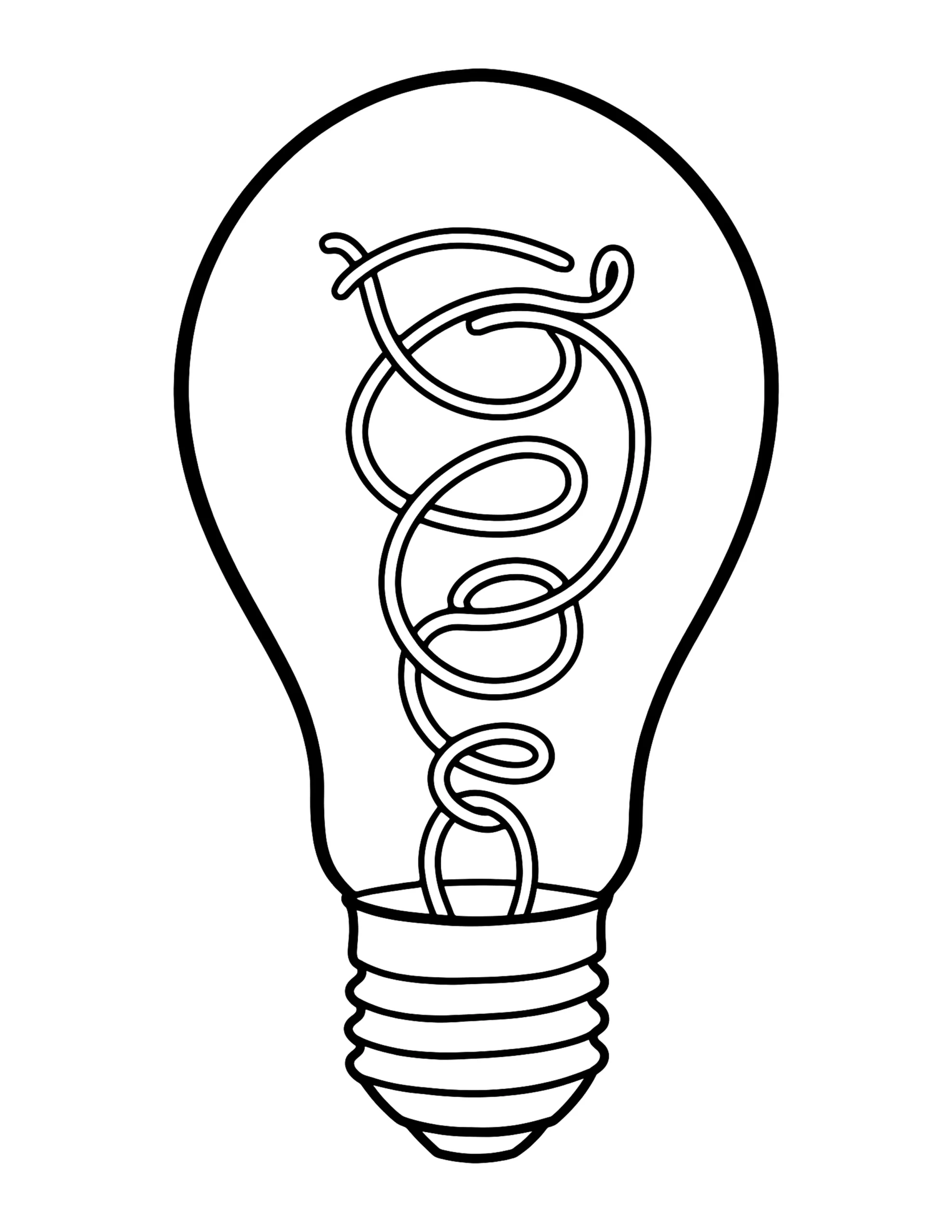
This beautiful old-fashioned bulb has a long, looping filament that curls inside the glass, like early bulbs from the days of Thomas Edison. Older kids and even adults enjoy its vintage look. Coloring tip: color the filament in warm orange and amber so it looks like it is really glowing.
7. Light Bulb With a Plant Growing Inside
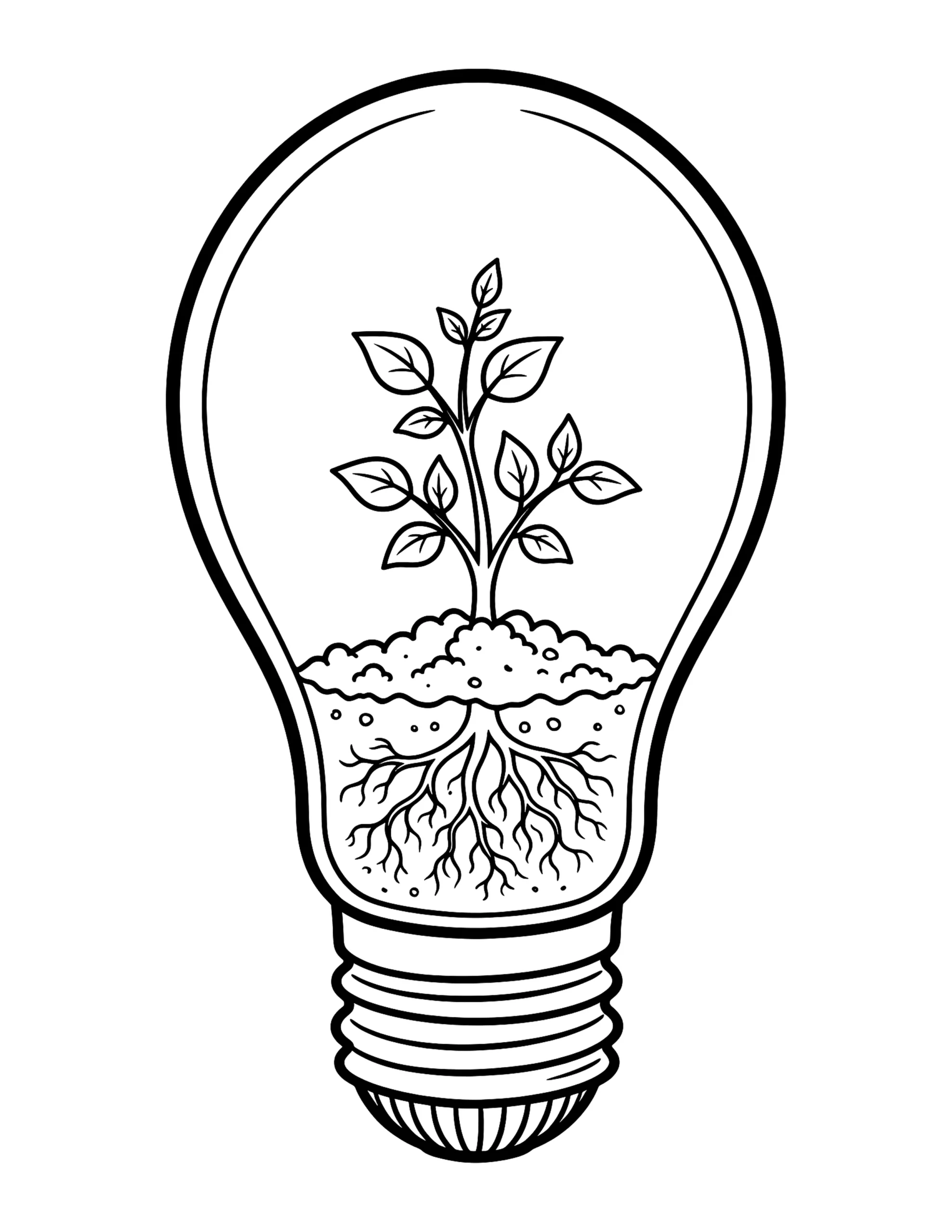
Part terrarium, part science art: a tiny plant with leaves and roots growing inside a clear light bulb. A sweet page for Earth Day, spring lessons, and talks about saving energy. Coloring tip: greens for the plant, a little brown for the soil, and a very light blue for the glass.
8. String of Party Lights
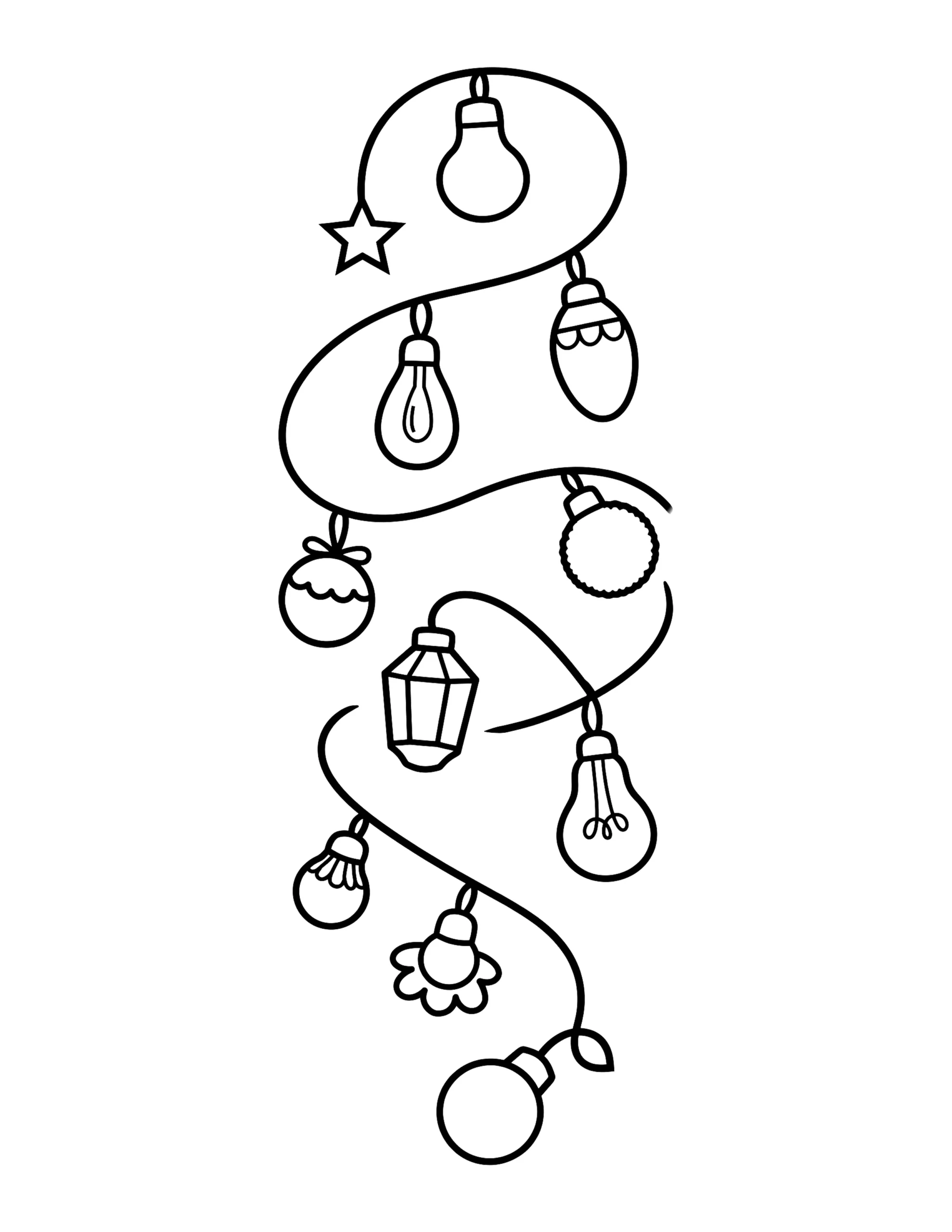
A happy string of party lights loops across the page, with bulbs of different sizes hanging from a curving wire — the most festive page in the set, perfect for birthdays and holidays. Coloring tip: repeat a color pattern — red, blue, green, yellow — all the way across.
9. Table Lamp With a Bulb
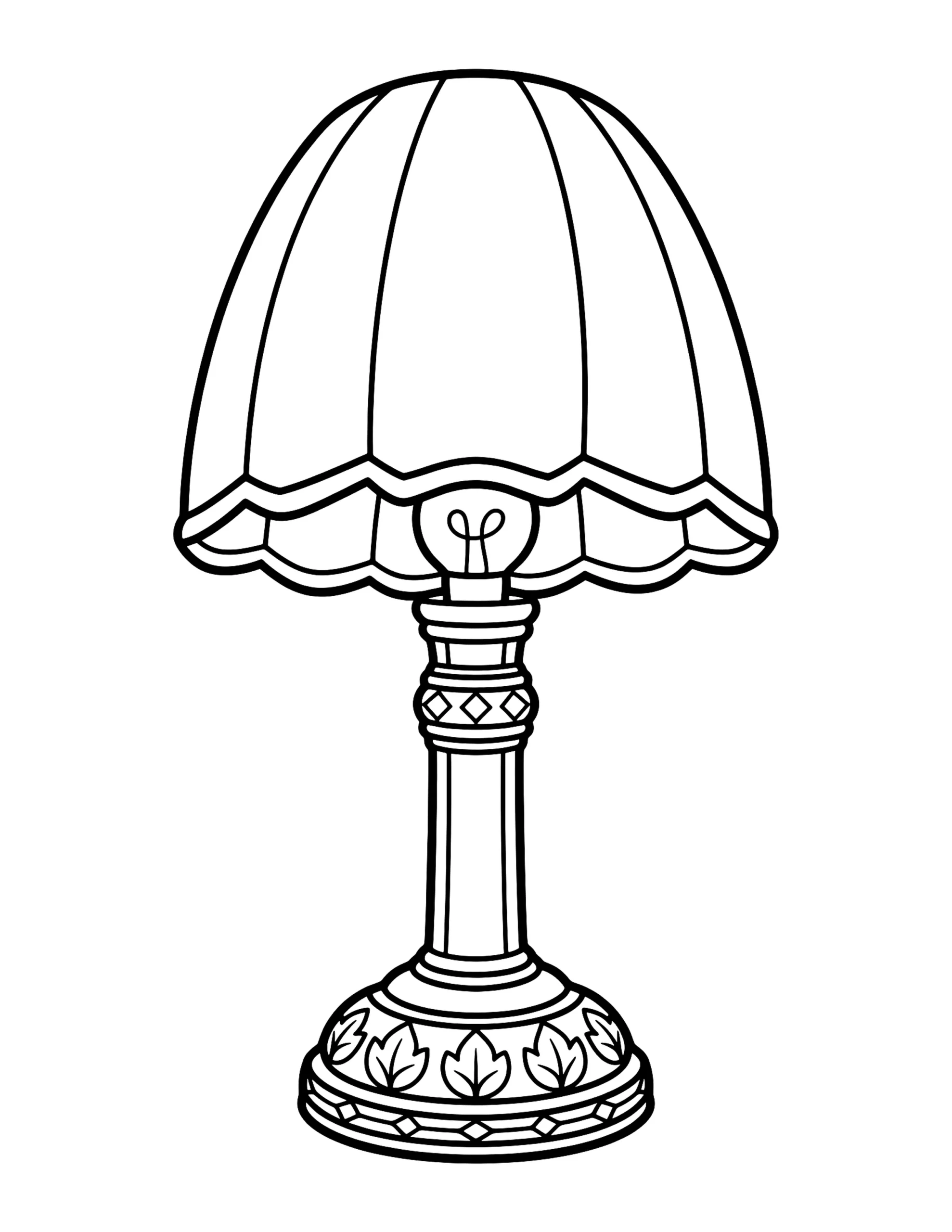
A cozy table lamp with its shade, stand, and glowing bulb inside shows kids where light bulbs do their job at home — great for lessons about everyday inventions. Coloring tip: add stripes or polka dots to the shade, and soft yellow under it for the light.
10. Light Bulb With a Brain Inside

Inside this bulb, instead of a filament, there is a brain! A clever design about thinking and smart ideas — a favorite for school projects and science fairs. Coloring tip: color the brain pink or purple, and add bright yellow rays outside the glass.
11. Light Bulb Pattern Design (Detailed, for Older Kids)
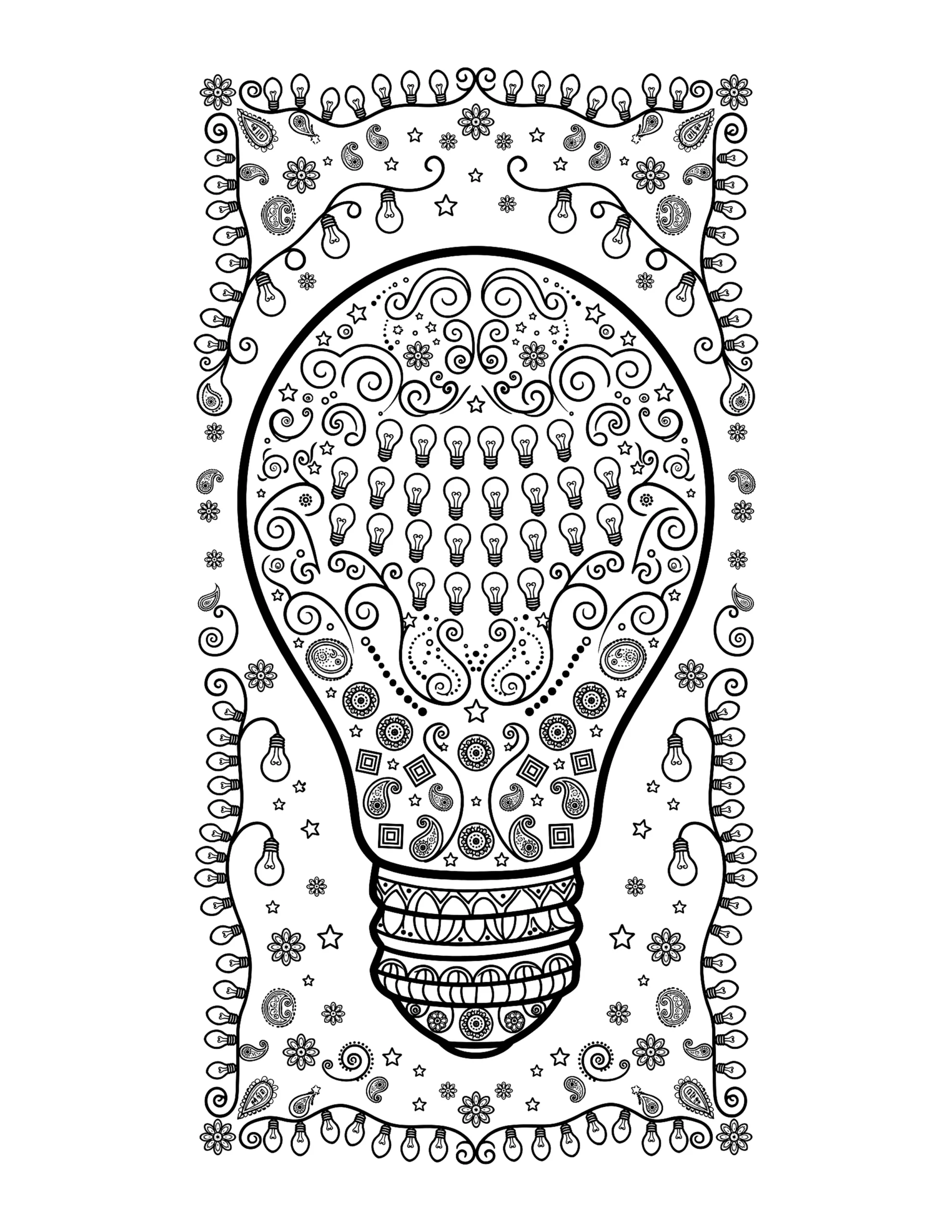
This detailed page is filled with light bulbs, swirls, stars, and repeating patterns — a real challenge for older kids, teens, and adults who like intricate designs. Coloring tip: repeat three or four colors through the pattern; fine-tip markers suit the small spaces.
12. Light Bulb and Light Switch
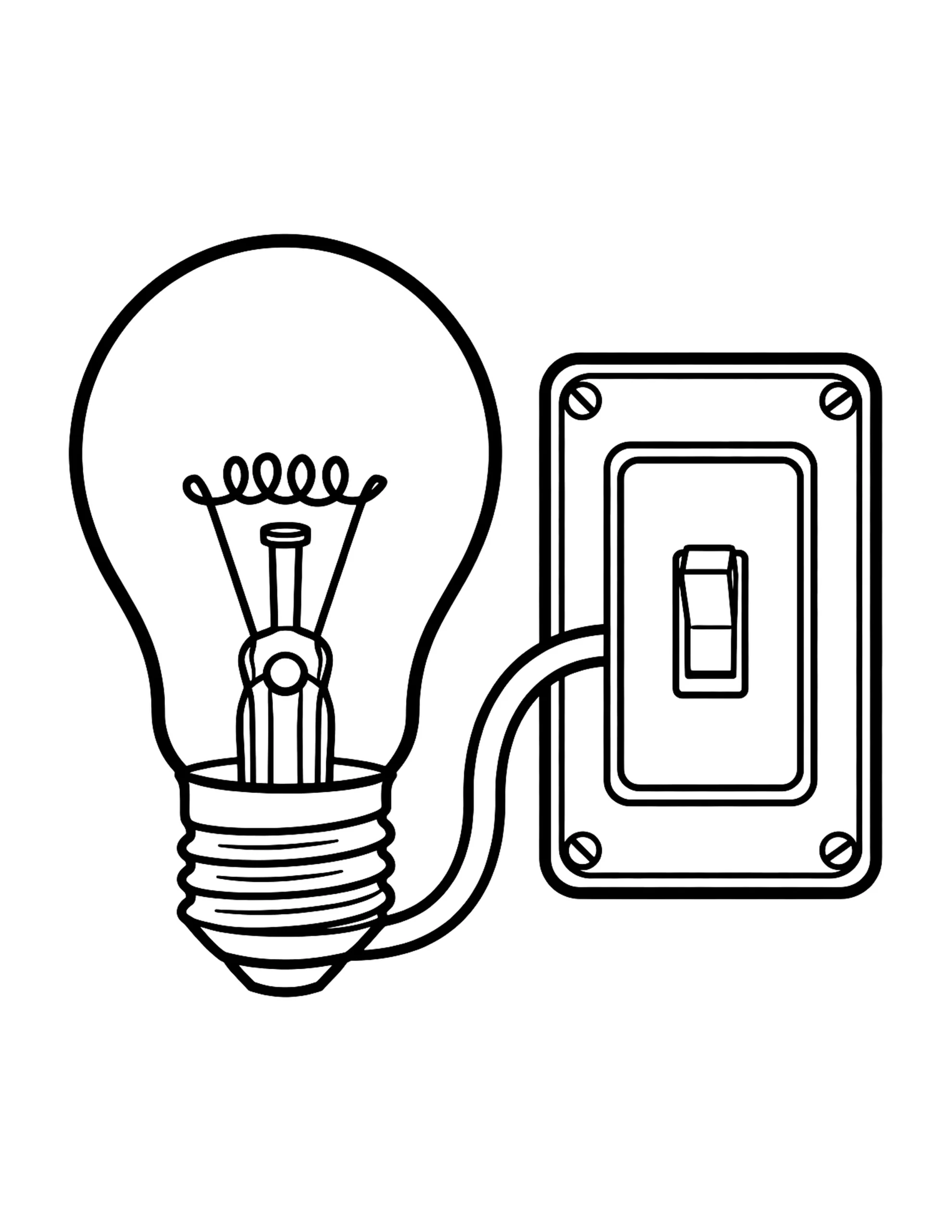
Flick! A light bulb next to the light switch that controls it — a simple way to show how a circuit opens and closes to turn a light on and off. It pairs perfectly with electricity coloring pages for kids. Coloring tip: print two copies — one glowing bright for “on,” one plain for “off.”
13. Glowing Light Bulb With Stars

A big, happy bulb glows in a night sky full of stars and sparkles — a cheerful page for bedtime coloring and bright-idea classroom displays. Coloring tip: use deep blue or purple for the sky so the yellow bulb and white stars really pop.
14. Simple Light Bulb Outline (Easiest, for Toddlers)
Our simplest page of all: one big light bulb outline with thick lines and no small details, made for toddlers still learning to hold a crayon. Coloring tip: big chunky crayons work best — and scribbles are welcome!
Light Bulb Fun Facts for Kids
Thomas Edison made a practical bulb in 1879. Many inventors worked on electric light before him, so Edison did not invent the very first light bulb. In 1879 he created a practical, long-lasting version — and a whole system to power it — which is why his name is the one we remember.
The filament is the part that glows. Inside a classic bulb, the filament is a very thin wire. When electricity flows through it, the wire gets incredibly hot and glows — that glow is the light you see.
LED bulbs save energy. An LED bulb uses much less energy than an old-fashioned bulb for the same amount of light, and can last for many years — one of the easiest ways families can save electricity.
A bulb over your head means an idea. In cartoons, a light bulb above someone’s head symbolizes a brand-new idea or sudden clever thought — which is why these pages are so popular for writing and invention lessons!
Bulbs need electricity to work. A bulb cannot shine on its own: it needs electricity flowing through wires and a switch. Turn the switch off, the flow stops, and the light goes out.
Bright Idea Activities to Try
Draw your own big idea bulb. Draw a fresh light bulb on a blank sheet and write or draw your best idea inside it — an invention, a story, a game, anything. Hang them up for a “bright ideas” display.
Go on a light bulb hunt. Walk through your home and count every bulb you can find — lamps, ceiling lights, the fridge light, night-lights. Guess first, then see who was closest. Look, don’t touch!
Talk about saving energy. Start a simple chat about energy: switch off lights when you leave a room, use daylight when you can, and choose LED bulbs. Kids can color a “switch it off” reminder sign for a bedroom door.
Try a simple circuit — with an adult only. With a grown-up in charge the whole time, kids can see a real circuit work using a battery, wire, and a small low-voltage bulb or LED from a science kit. An adult must set it up and supervise every step — children should never experiment with wall outlets, plugs, or mains electricity.
Light Bulb Coloring Tips
Yellow, gold, and soft orange are the classic glow colors — layer pale yellow over the glass, then add deeper gold near the filament. Color the screw base and metal parts grey or silver; a metallic gel pen looks like real metal. For glass, less is more: leave white space, or use your lightest blue-grey, so the bulb looks clear and shiny. Dark backgrounds make every bulb shine brighter.
Frequently Asked Questions
Are these light bulb coloring pages free?
Yes — every page is completely free to print for personal and classroom use. Print one copy or a whole class set, as many times as you like — no sign-up, no cost.
Who invented the light bulb?
No single person invented it alone. Many inventors in the 1800s made early electric bulbs, but they burned out too quickly to be useful. In 1879, Thomas Edison created a practical, long-lasting bulb and the electrical system to go with it — why he is famous for it today.
What does a light bulb above your head mean?
It is a picture symbol meaning someone has just had a new idea — like a light switching on in their mind. You will see it in cartoons, comics, and classroom posters about thinking and inventing.
What age are these light bulb coloring sheets for?
There is a page for almost every age. The simple outline (page 14) and smiling bulb suit toddlers and preschoolers, most pages suit ages 4 to 10, and the pattern page challenges older kids and teens. The labeled parts page works well for elementary science classes too.
How do I print light bulb coloring pages?
Choose your page and print it on US Letter or A4 paper using “fit to page.” Standard paper is fine for crayons and pencils; thicker paper or card stock is better for markers. You can also open the pages on a tablet for digital coloring.
Keep Coloring
Finished every bulb? Keep the science theme going with our science coloring pages, try the hands-on electricity worksheets for kids, and meet more great thinkers with our inventor coloring pages.
13 Comments